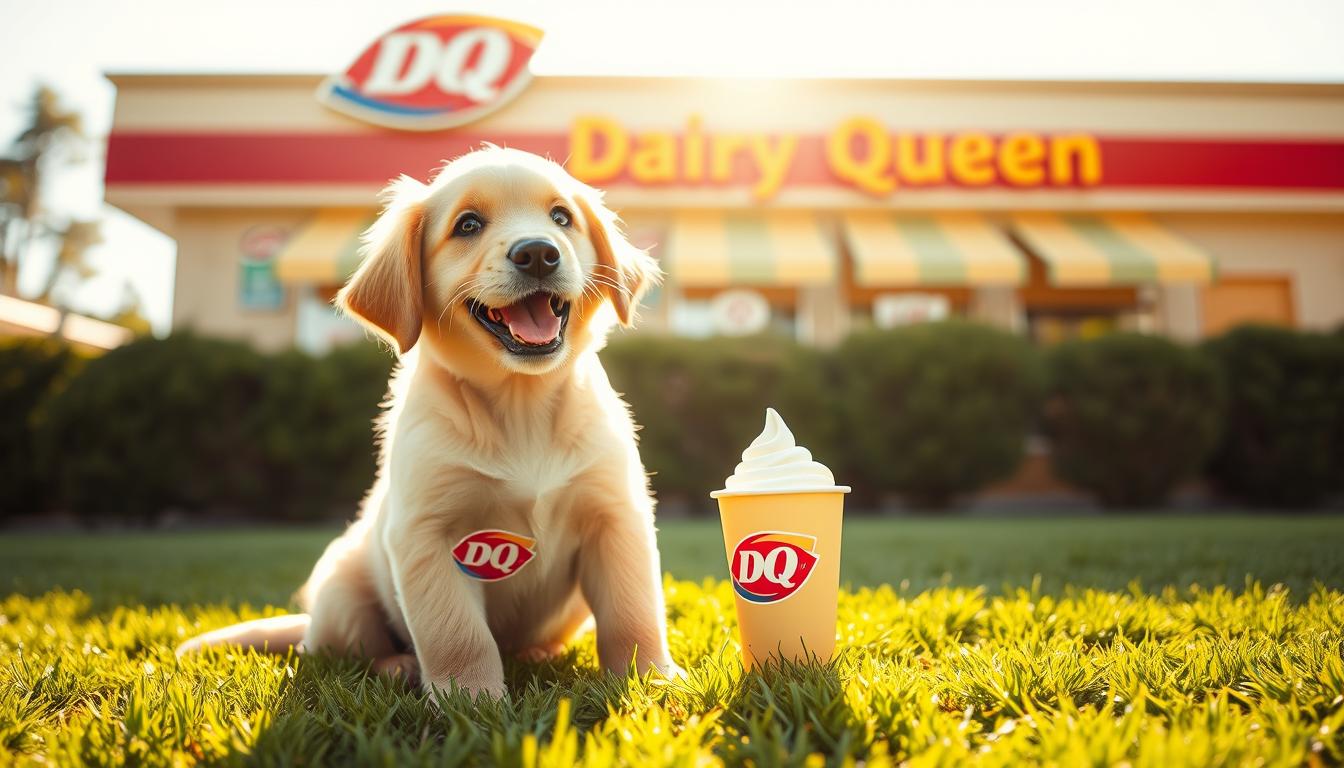
Does Dairy Queen Have Pup Cups
Many pet owners ask this exact question when they see a DQ or hear about the secret item. The short answer: the treat usually exists, but it is an off-menu request rather than an advertised product.
Availability varies by location and franchise ownership. Some stores hand out a small cup of soft-serve or a plain cup for a dog at no cost. Others may charge a nominal fee or decline for policy reasons.
This introduction previews what the guide covers: what a typical pup cup contains, how to order at the counter or drive-thru, and tips for sharing frozen treats safely with your pet. Expect simple steps to avoid confusion at the register and to make the experience pleasant for both you and your dog.
Does Dairy Queen Have Pup Cups?
Some shoppers expect a labeled dog treat at the counter, then learn the item is more of a friendly favor than a sold product.
Why it won’t appear on the menu
You generally won’t see pup cups listed on the official menu. Stores avoid marketing human food as pet products because of liability and brand positioning concerns.
That means the small cup is treated as a special request rather than a standard menu item. Staff may refuse or politely decline for safety or policy reasons.
How franchise locations affect availability in the United States
Many locations are independently owned, so each operator sets local practice. Some managers comp a tiny cup, others charge a small fee, and some won’t provide one at all.
- Answer: yes, many places will make pup cups, but it’s not guaranteed across all locations.
- If short on time, call ahead or ask when you arrive to avoid surprises.
- Staff familiarity varies—say “small cup of plain soft serve for a pup” if they don’t know the term.
Policies differ even within the same city, so don’t assume a universal rule. Next, learn what goes into that cup and what to avoid when sharing treats with dogs.
What’s in a Dairy Queen Pup Cup (and what it’s not)
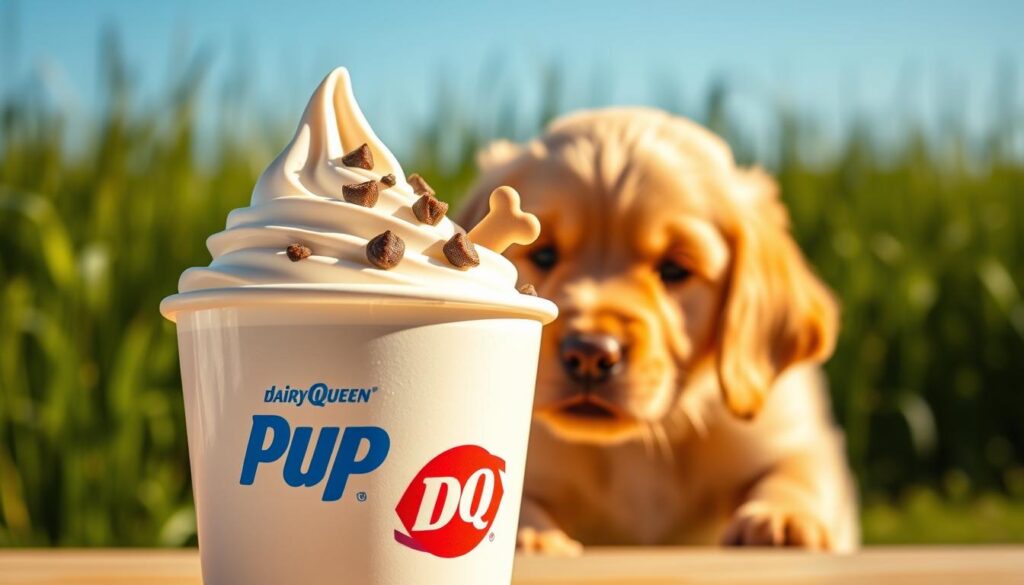
A typical pup cup is a small cup filled with plain vanilla soft serve or vanilla ice cream. It’s served simple so owners can watch how their dog reacts to a dairy treat.
Typical build
Most servings are plain soft serve in a tiny cup. Staff usually avoid mixing in candy, chocolate, or cherries meant for people.
Common add-ons
Some locations place a dog biscuit, often a Milk-Bone, on top. Not every store includes this, so ask if you want one.
- Plain base = easier to gauge tolerance for ice cream.
- Real soft serve can count as a menu item, so some stores may charge.
- For sensitive pets, request no biscuit and a very small portion.
| Item | Main Ingredient | Toppings | Richness |
|---|---|---|---|
| DQ pup cup | Vanilla soft serve / vanilla ice cream | Optional dog biscuit | Moderate (actual ice cream) |
| Whipped-cream pup cup | Whipped cream | Rarely a biscuit | Light (less dairy fat) |
| Full sundae | Ice cream + mix-ins | Candy, chocolate, syrup | High (not for dogs) |
Knowing these differences helps when you order at the counter or drive‑thru. Next, learn the best way to ask and what it might cost.
How to order a pup cup at Dairy Queen and what it may cost
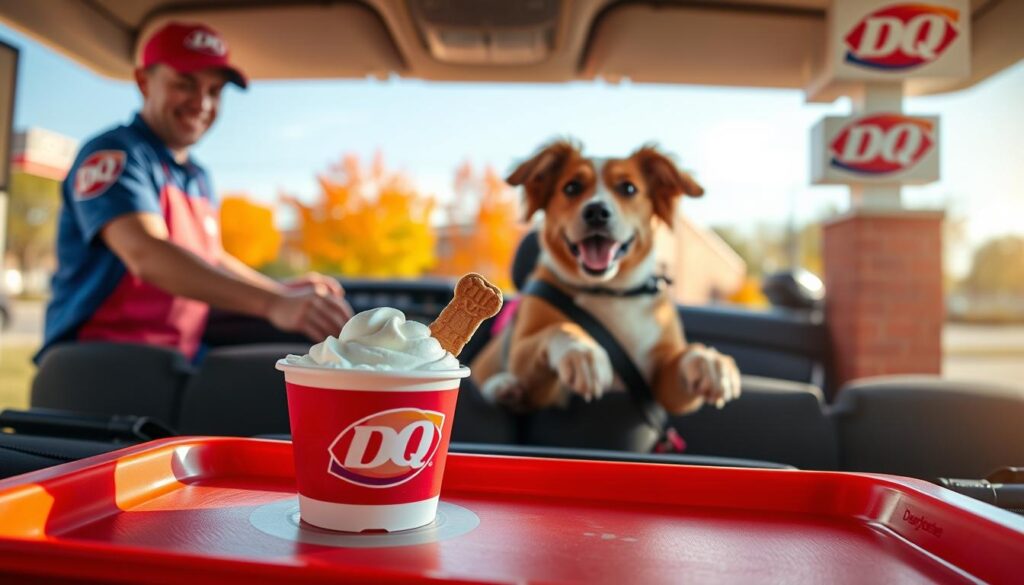
A quick script can help you get a mini serving for your dog without confusion.
What to say at the counter or drive‑thru
Use this simple line: “May I get a pup cup, please?” Pause so staff can confirm what they offer.
If the team looks unsure, say: “A small cup of plain vanilla soft serve, no mix‑ins.” That fallback maps directly to the menu item.
Pricing and why it varies
Many locations comp the treat, but some charge a small fee. Reported examples range from about $1.49 to higher totals in rare cases such as $2.71. See a specific customer report for one example.
Why the difference? Individual franchises set local policy. Because some pup cups use real ice cream or soft serve rather than whipped cream, operators may ring it up as a menu item.
Save time and avoid surprises
Call ahead to ask what the location calls the item, whether they offer it, and if there’s a charge. If you need multiple cups for multiple pups, confirm size and per‑cup cost before ordering.
| What to Say | Fallback | Typical Cost | Notes |
|---|---|---|---|
| “May I get a pup cup, please?” | Small cup of plain vanilla soft serve | Often free to ~$1.50 | Pause to let staff confirm |
| Drive‑thru script | “Small plain soft serve, no mix‑ins” | $1.49 reported; higher rare | Some franchises charge, some comp |
| Ordering multiple | Ask about per‑cup charge | Depends on location policy | Clarify size to avoid surprises |
Once you have the cup, the next step is sharing the treat in a way that’s gentle on your pet’s stomach.
Sharing DQ soft serve with your dog safely
Before you hand over a spoon, know that soft-serve treats are best given sparingly. Ice cream and other dairy sweets contain fat and sugar that can upset a dog’s stomach.
Start with a few licks or a small spoonful from the cup the first time. Wait and watch for bloating, gas, diarrhea, or vomiting—these signs can mean lactose sensitivity.
Choose plain vanilla or a simple soft serve without add-ins. If your dog has pancreatitis, diabetes, weight issues, or known allergies, check with your vet first.
Offer the treat when you can supervise and keep portions tiny. For multi-pet homes, remember cats often react more strongly; give them only a tiny taste if at all.